How might we create a modular play experience that sparks curiosity about climate change and builds empathy for the environment?
Power the Planet is a modular, interactive city-building game that helps children ages 7–11 understand renewable energy, pollution, and sustainability through hands-on cause-and-effect play.
By making their own design choices, kids see how their actions directly impact both the city and the environment.
Collaborators: Neel Shah (Berkeley MDes, 2022), Megan Zhang (Berkleley MEng, 2023), Junkai Shao (Berkeley MEng, 2023), Peggy Shao (Berkeley PhD, 2027)
Teach Green!
Inspiring Kids to Build a Better Future
Our Design Thinking Approach
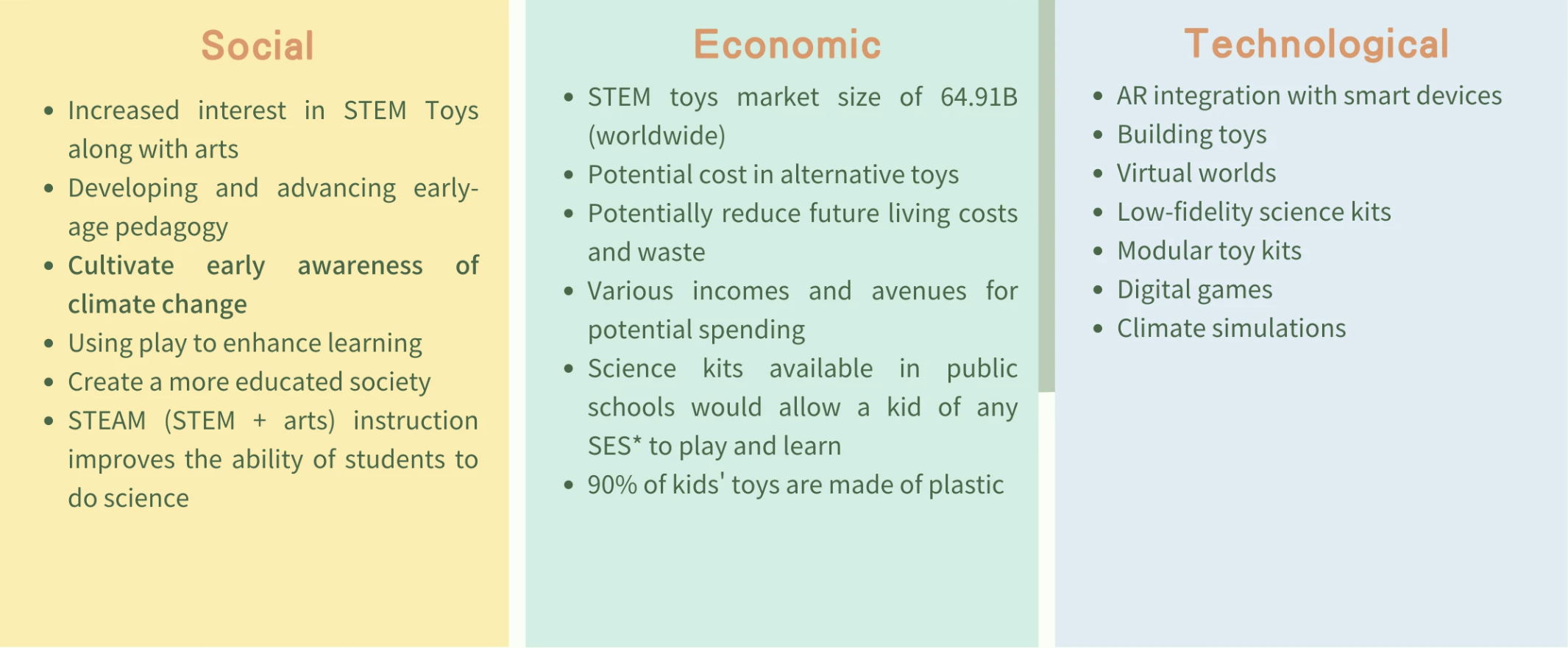
We grounded our design process in a combination of trend analysis and user-centered research.
Using the SET framework (Social, Economic, Technological), we identified early opportunities around STEAM integration, accessibility across socioeconomic groups, and the rise of AR/digital play.
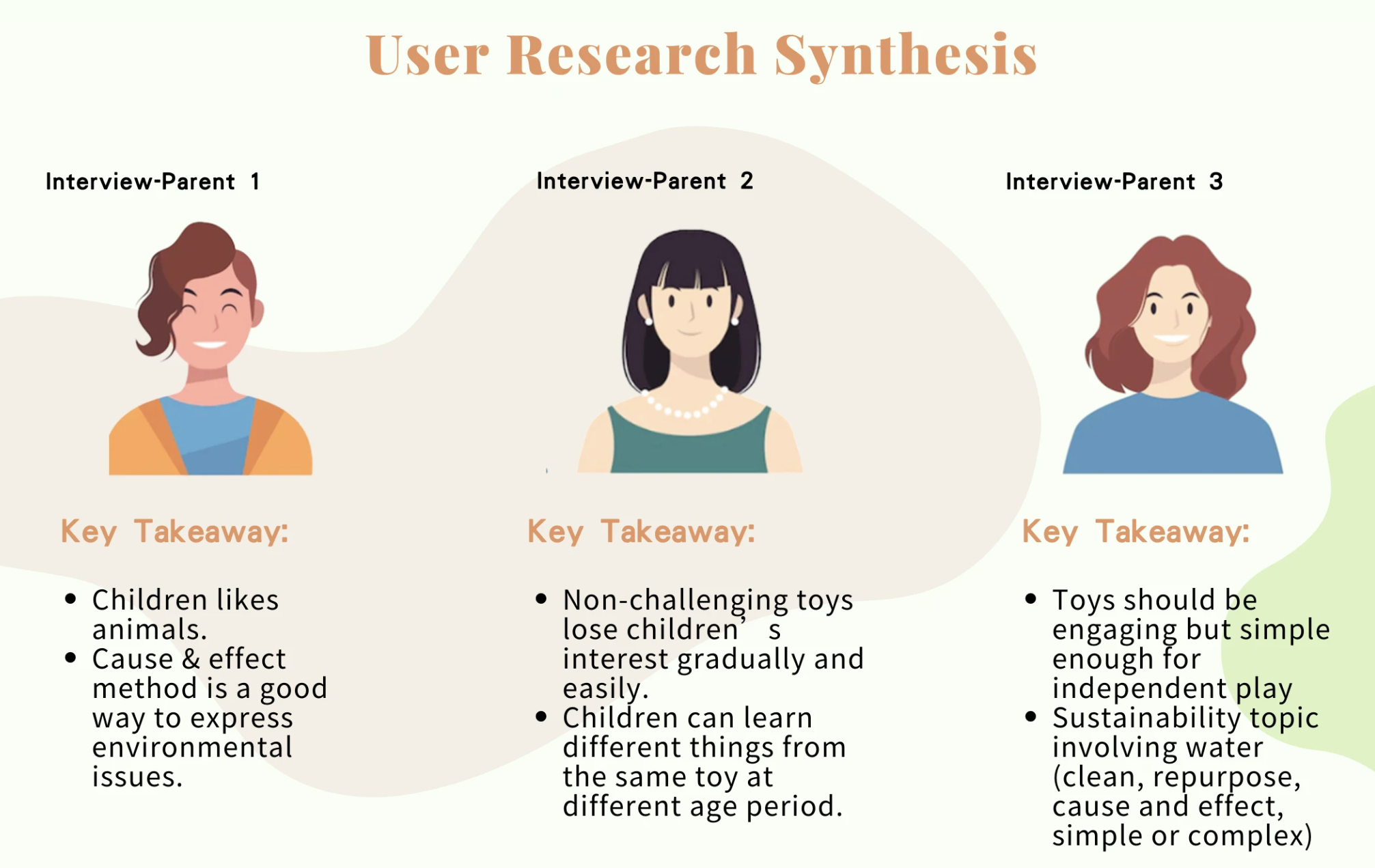
We conducted research by observing how children and their parents engage in play together at the Lawrence Hall of Science and the San Francisco Exploratorium. We interviewed parents about their needs and preferences.
Key insights included:
Children learn best through hands-on cause-and-effect interaction.
Animals and water systems provide highly relatable entry points for climate concepts.
Parents seek toys that are open-ended, safe, and easy for independent play.
Concept Development
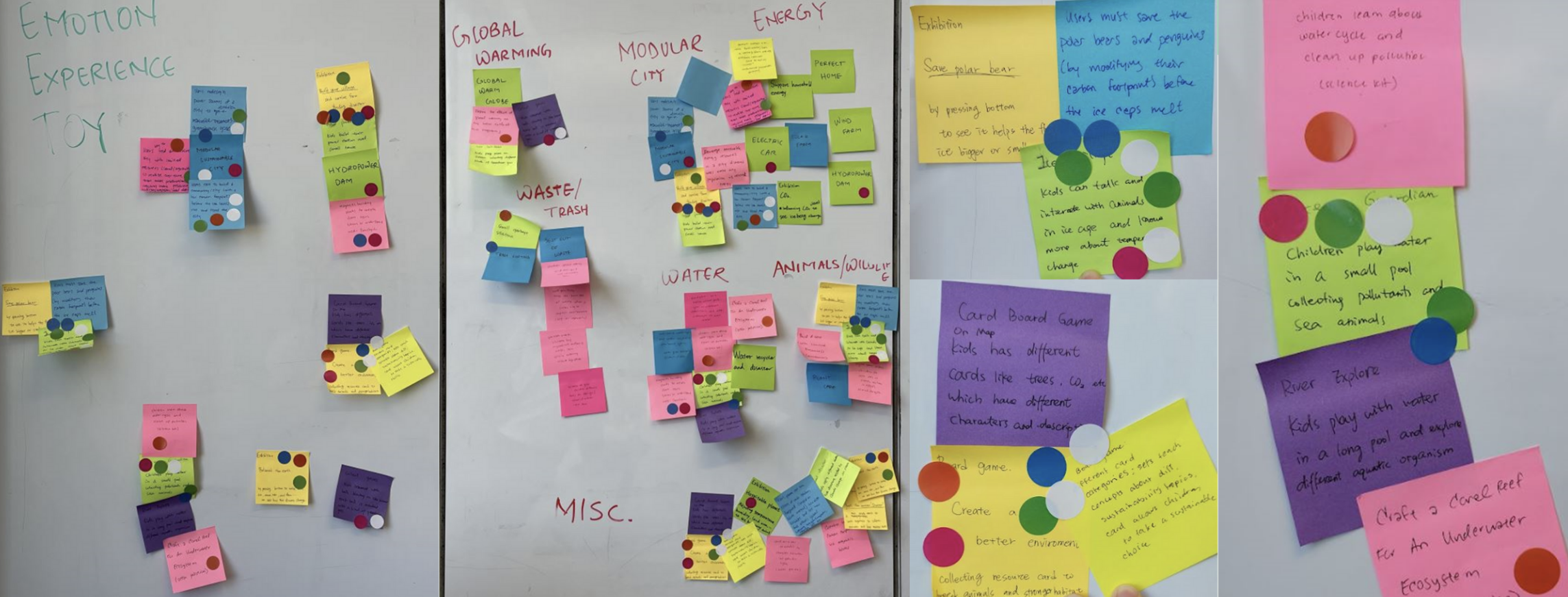
We applied structured ideation methods to explore a wide range of possibilities.
One key technique was 5-3-5 brainstorming, where each team member generated three ideas, then passed them on for others to build upon over five rounds. Alongside design heuristics and analogical reasoning, this process helped us generate over 50 concepts.
We then clustered the ideas, mapped them against our product requirements, and used dot voting to prioritize six finalists for further development. This led us to our final design, which we fabricated and show below:
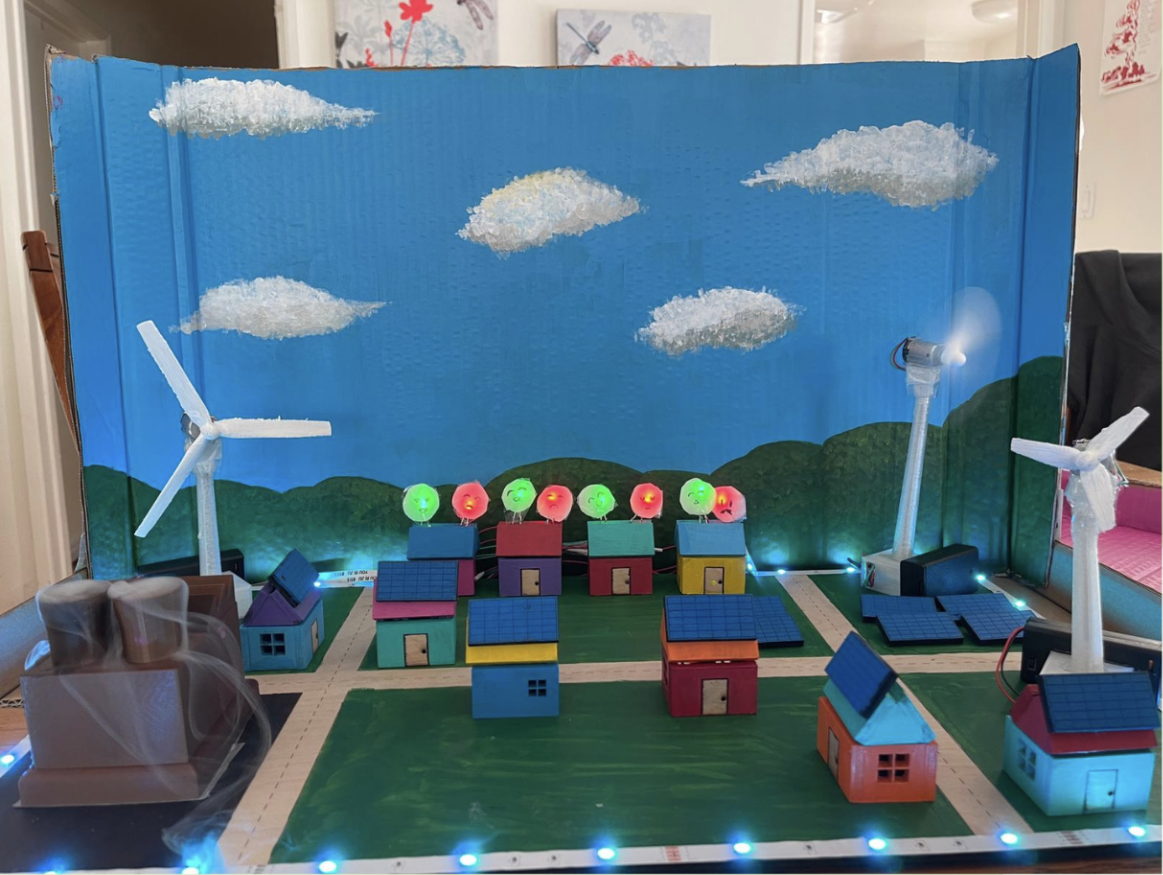
Final Prototype
Power the Planet
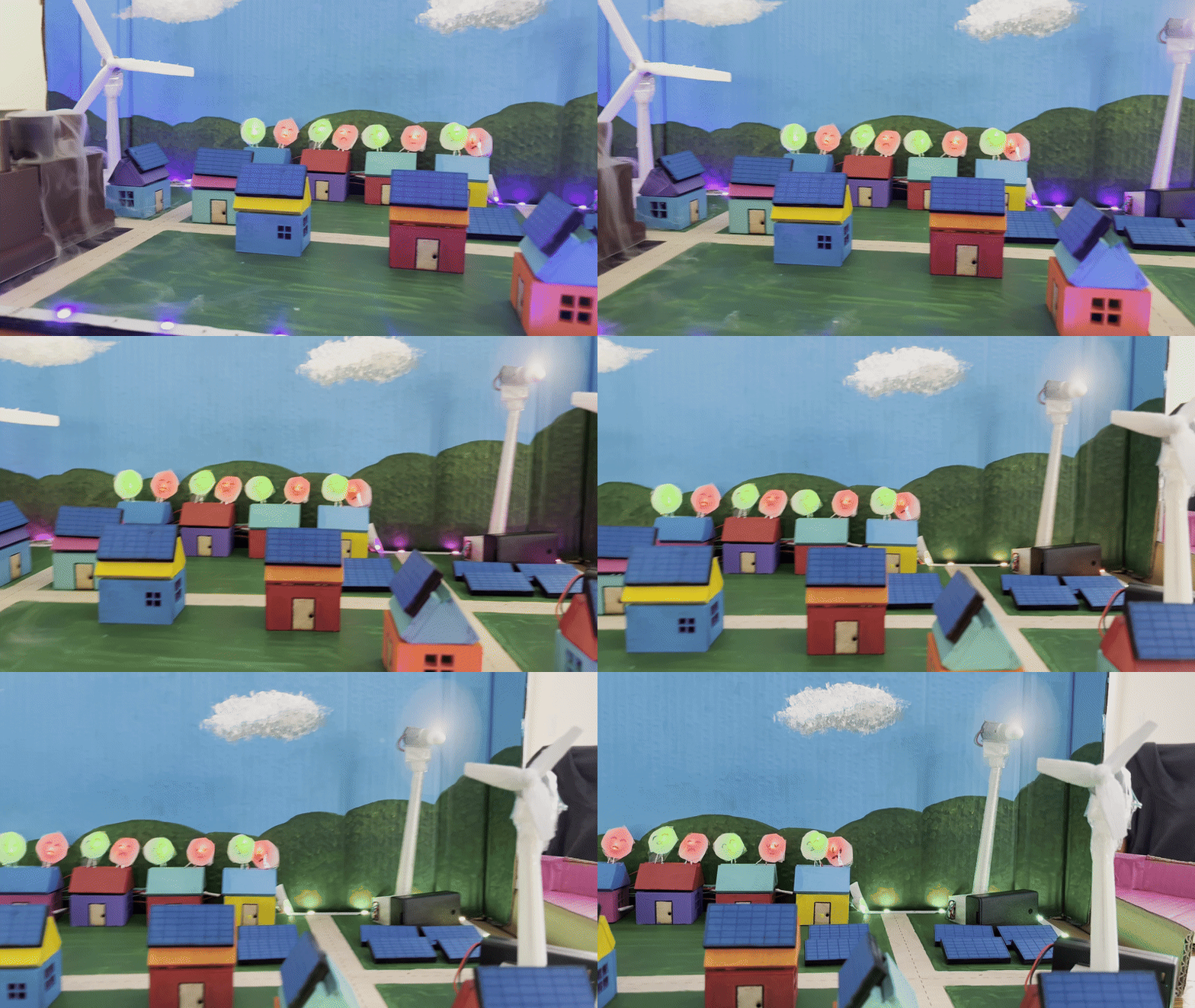
Power the Planet is a city-building toy that challenges children to balance energy demand with pollution control:
Systems Thinking Through Play: Solar panels, wind turbines, and power plants generate different power outputs and pollution levels.
Tangible Feedback: LEDs brighten as energy increases; pollution is visualized with dry ice; smiling faces on houses reflect community health.
Cause-and-Effect Mechanics: Children directly experience trade-offs—choosing more power often means more pollution.
reflection
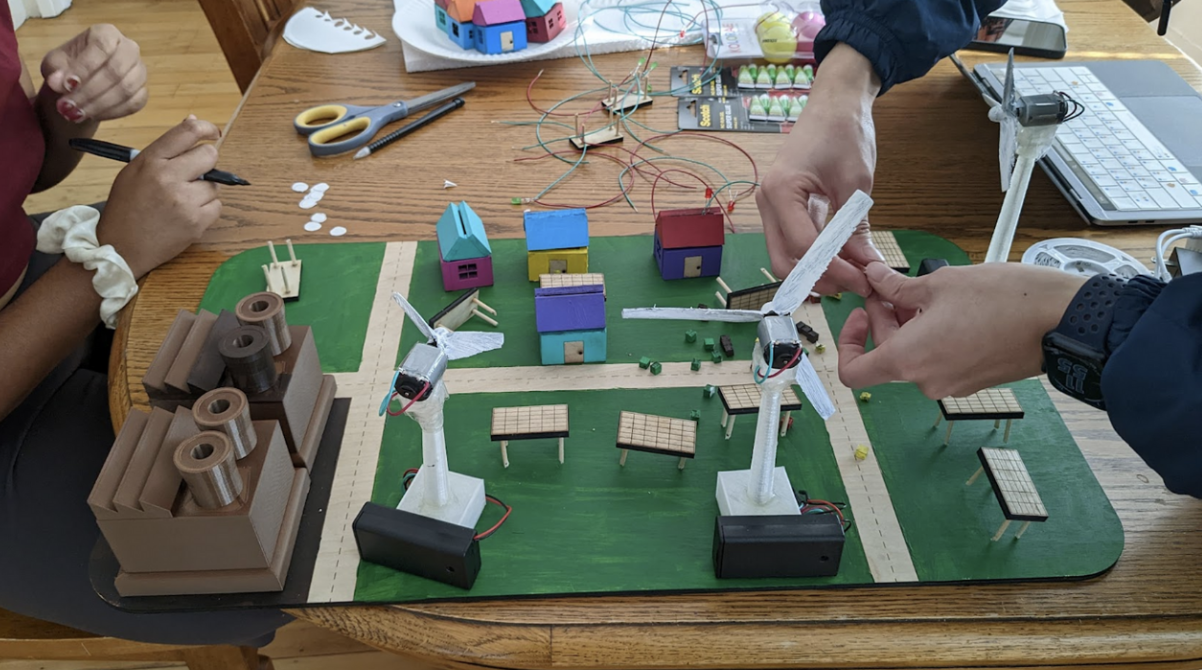
I learned how each stage of design thinking—empathizing with users, defining needs, ideating broadly, prototyping, and evaluating—plays a critical role in shaping the final outcome.
Seeing how research insights and structured creativity led directly to our prototype was eye-opening.
Personal Contribution
Team Leadership & Coordination: Organized team meetings, facilitated decision-making processes, and ensured smooth collaboration throughout the project.
Branding & Identity: Designed the team logo and tagline to give the project a clear, cohesive identity.
Project Management: Coordinated purchases and managed logistics to keep the team on track.
Prototyping: Contributed directly to the design and construction of the final prototype (computer-aided drawing, laser cutting, materials sourcing, concept ideation)
Peer Feedback (Anonymous Survey):
“Shares lots of innovative ideas and a warm heart.”
“Adds humor and lightens the group dynamic!”